PLDT and Smart Communications are calling for stronger media literacy and critical thinking as artificial intelligence, online algorithms and coordinated influence campaigns make misleading information harder to identify.
At a recent PEG-Usapan Natin Session in Makati City, journalists, researchers and public sector representatives discussed how disinformation can exploit genuine facts presented out of context, manipulate emotions and amplify misleading narratives across digital platforms.
Camille Diola, chief editor of Philstar.com and Interaksyon, said information verification must go beyond determining whether a post is genuine or fabricated.
“The better questions are: Where did this come from? What evidence supports it? What is missing? Is the context intact? And how certain can we actually be?” Diola said. “Those are the same questions journalists ask every day.”
She cited the rise of AI-generated content, decontextualized information and coordinated amplification campaigns as factors increasing the importance of verification.
JM Lanuza, assistant professor of political science at the University of the Philippines Manila and head of research at the Sigla Research Center, said disinformation works by exploiting human behavior and emotional responses.
“Everyone is vulnerable,” Lanuza said. “Influence operations are effective because they tap into fears, aspirations, frustrations, and emotions.”
He said countermeasures should include helping people recognize manipulation before it occurs, rather than relying solely on corrections after misleading information has spread.
Transparency and digital literacy
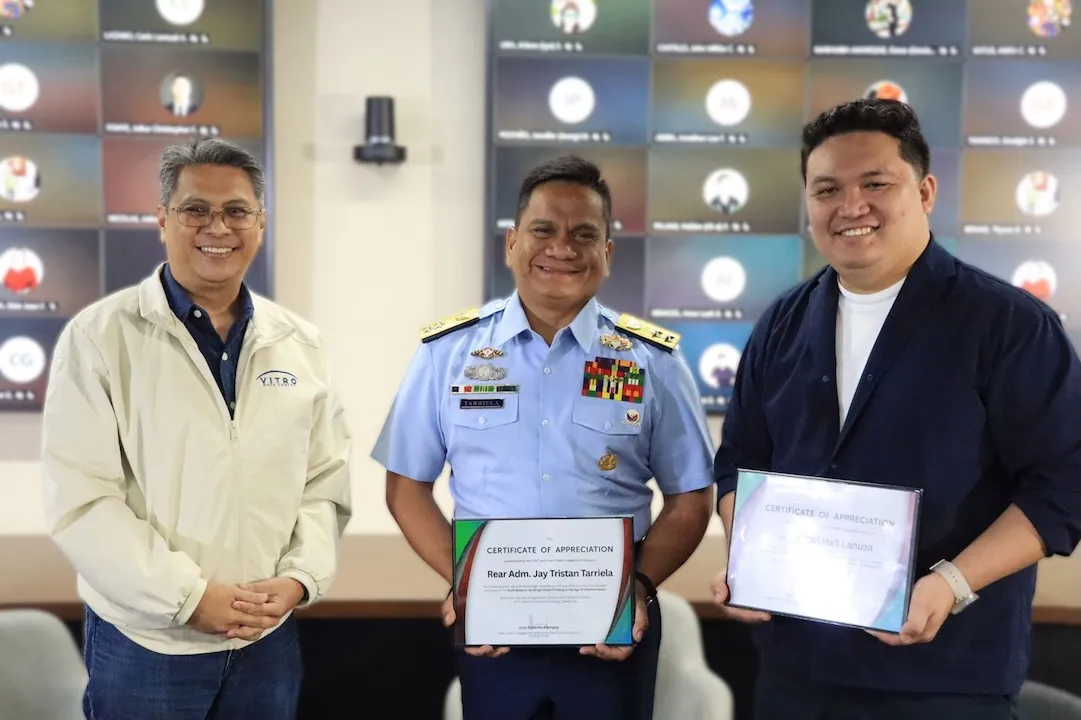
Rear Adm. Jay Tarriela, Philippine Coast Guard spokesperson for the West Philippine Sea, said disinformation can weaken public trust and divide communities, particularly when information is used to influence perceptions of national issues.
“Our greatest challenge is disinformation, because it confuses people, erodes trust, and divides communities,” Tarriela said. “Transparency allows people to see facts for themselves and make informed judgments.”
Gian Lao, deputy head of PLDT and Smart’s Public Engagement Group, said online personalization technologies and algorithms increasingly influence the information people encounter.
He said continued discussions involving experienced journalists and other specialists could help strengthen responsible information consumption and awareness of online manipulation.
The forum highlighted the need for cooperation among individuals, media organizations, educators, institutions and technology platforms to build resilience against disinformation.
Telco also provides scam reporting channels
Separately, Smart urged customers to report text scams and smishing messages through its HuliScam reporting portal.
Customers may also report cyber threats through Smart Communications’ verified Facebook page, its @SmartCares account on X, or the company’s *888 hotline.
The initiative complements the group’s broader efforts to promote safer digital participation, although the forum’s central focus was on critical thinking and media literacy rather than the announcement of new technical safeguards or regulatory measures.