
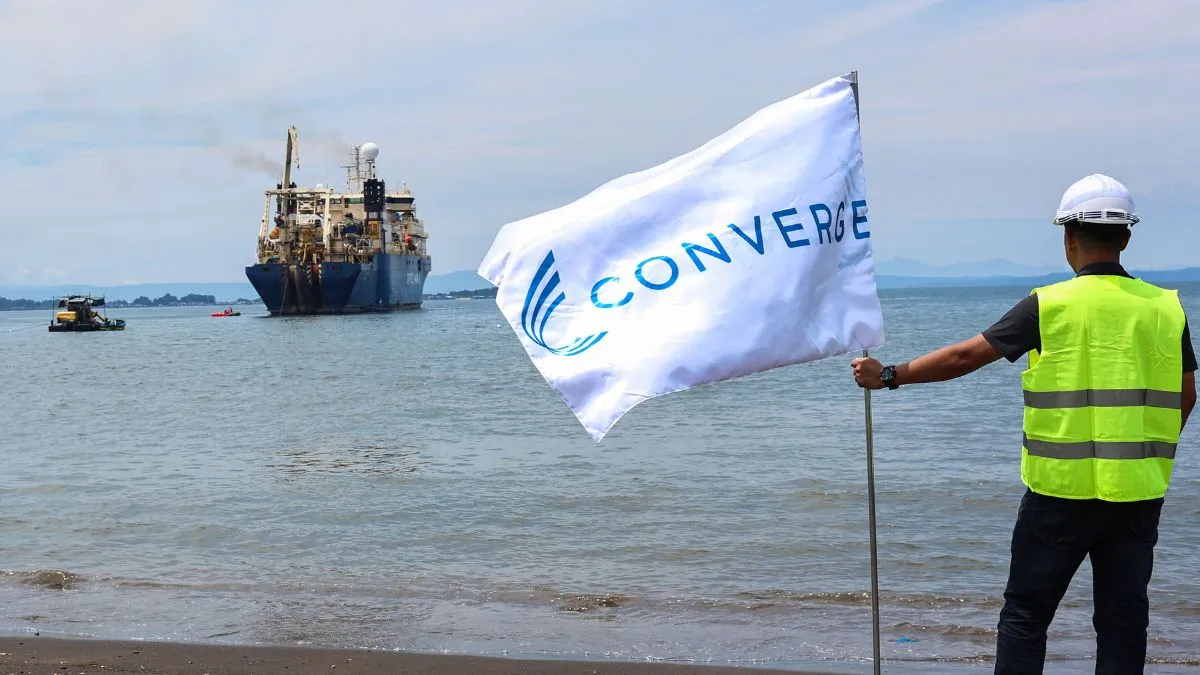
Converge ICT Solutions Inc. said it quickly restored normal routing for international traffic following a submarine cable disruption between the Philippines and Singapore, relying primarily on the Bifrost cable system to minimize service interruptions for residential and enterprise customers.
The disruption on Friday affected access to some applications and websites hosted in Singapore, according to the fiber broadband provider. Converge said it rerouted traffic through alternative international network paths, resulting in minimal to no disruption to its customers.
“This allowed none to minimal disruption in our services to both our residential and enterprise customers due to the cable issue between Singapore and the Philippines,” Converge CEO Dennis Anthony Uy said.
Uy said the company’s investments in international submarine cable systems began about five years ago to prepare for incidents that could affect connectivity. Its investments in Bifrost and the Southeast Asia-Hainan-Hong Kong Express Cable (SEA-H2X) provide alternative routes for international traffic.
The Bifrost cable system spans more than 20,000 kilometers and connects the Philippines to Singapore, Indonesia, Guam and the United States. It has a designed capacity of more than 240 terabits per second (Tbps). Converge serves as the Philippine landing party through its landing station in Davao and owns one fiber pair along the cable’s trunk.
SEA-H2X, meanwhile, spans about 6,000 kilometers and connects Hong Kong and Lingshui in Hainan, China, with La Union in the Philippines, Songkhla in Thailand and Singapore. The system has a designed capacity exceeding 200 Tbps.
Converge is part of the SEA-H2X consortium, which also includes China United Network Communications Group Co. and China Mobile International.
“With the additional capacity from these two new cables, Converge not only has the youngest but it also has the most resilient international network among Philippine operators today,” Uy said.
The incident highlights the importance of network redundancy as Philippine telecommunications providers depend on submarine cables for international internet traffic. Alternative routes can help operators maintain connectivity when a cable suffers a disruption, although actual service impact depends on available capacity, routing arrangements and the location of affected network infrastructure.